BODY COMPOSITION · 04
Protein and Real-Life Fat Loss: Building Meals You Can Keep Following
When people begin fat loss, protein quickly becomes the answer to everything. More protein. More shakes. More chicken breast. Then real life starts: work runs late, family meals happen, and the plan becomes too difficult to repeat.
I see protein as part of a useful fat-loss plan, not as a magic fix. The better question is: can you build meals that give you enough structure, keep you reasonably satisfied and still fit your actual week?
The short version
- Protein can be a useful part of a fat-loss plan, but it does not guarantee fat loss or muscle retention.
- A meal plan should work on ordinary weekdays, not only on highly disciplined days.
- The right amount and meal pattern depend on the person, their food preferences, body size, training, energy intake, health context and adherence.
- Start by making protein-containing meals easier to repeat. Review the whole plan before assuming you need a more extreme diet.
Protein matters, but it is not the whole plan
Protein is relevant when food intake is being adjusted for fat loss. In trials of adults with overweight or obesity, higher protein intake has been associated with better retention of measured muscle mass during weight loss. That does not mean protein prevents all muscle loss, protects strength for everyone or guarantees a particular body-composition result. [1]
Protein works inside a wider plan. Energy intake, resistance training, sleep, recovery, medical context and whether you can follow the plan all matter. Reviews also find that lean-mass effects are context-dependent, with energy restriction and resistance training affecting the picture. [2] A somewhat higher-protein pattern may help some people during an energy deficit, but more is not automatically better. [3] In one trial of older adults, higher protein did not significantly improve lean-mass loss, strength or physical performance. [4] A high-protein plan that you abandon after ten days is not automatically better than a more moderate plan you can follow for months.
Build meals before you chase perfect numbers
Many busy Malaysian adults do better when they stop treating every meal as a calculation exercise. Start with a simple question: where will the protein in this meal come from?
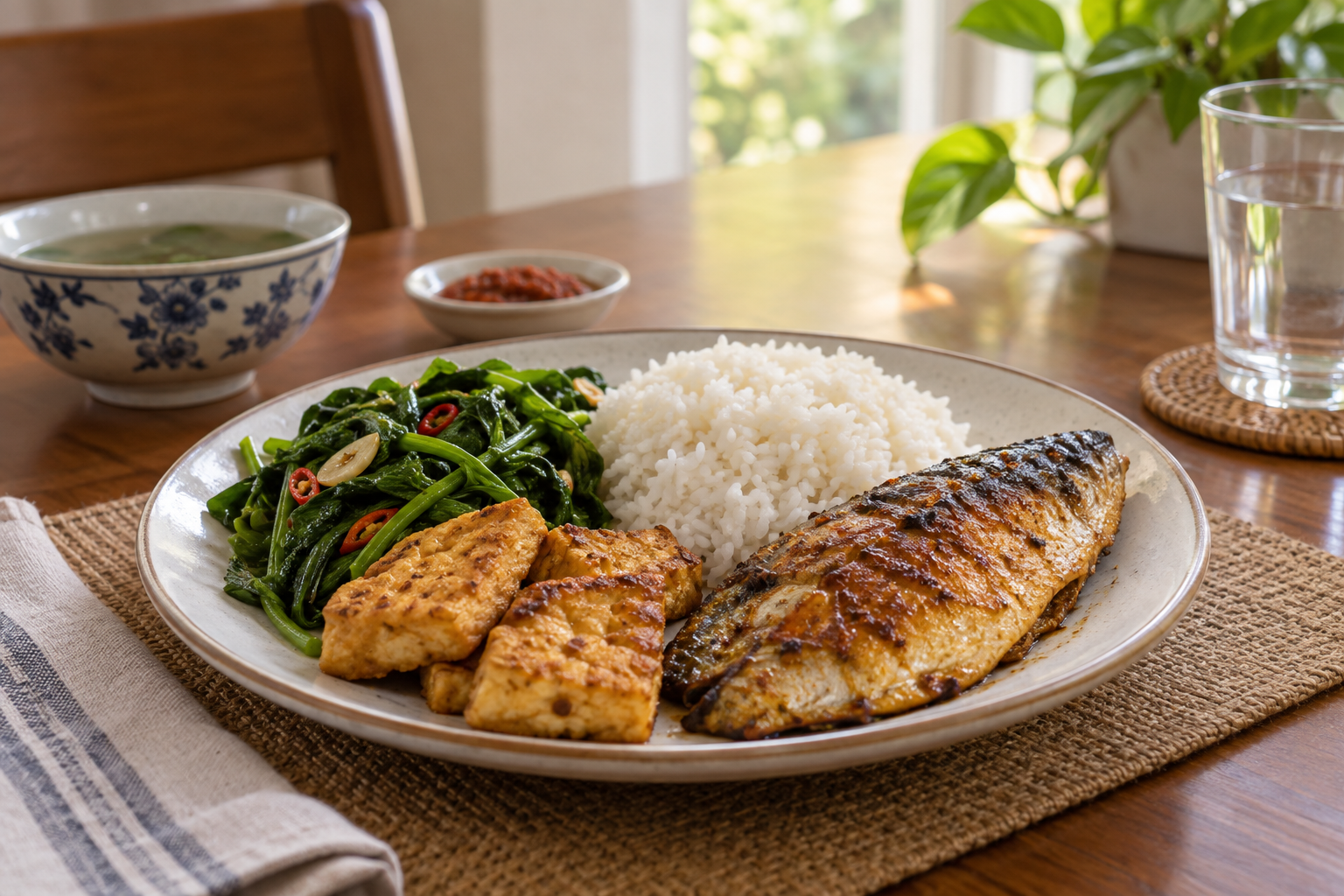
That could be eggs at breakfast, fish or chicken with rice at lunch, tofu or tempeh with vegetables at dinner, or another familiar food that fits your household. The point is not to make every plate look like an online fitness meal. The point is to make the next meal easier to manage.
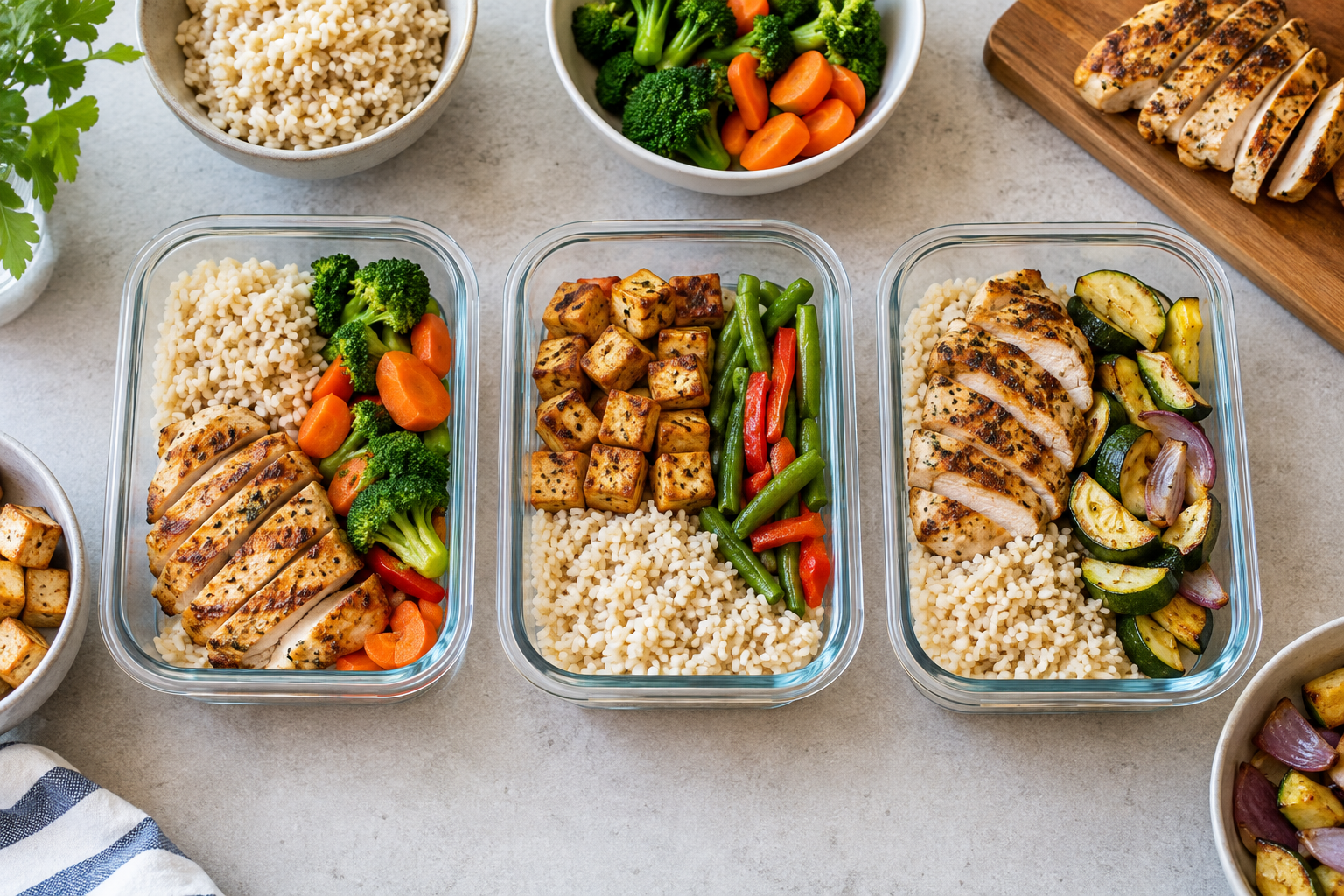
A practical meal can include:
- A familiar protein source.
- Vegetables, fruit or another fibre-rich food where it fits.
- A portion of carbohydrate and fats that suits the person, the meal and the wider plan.
- Enough flexibility to eat with family, travel or manage a busy workday.
What I look for in real life
I do not begin by asking whether a person can eat perfectly. I look for the meals that repeatedly cause trouble: a breakfast that becomes only coffee, a lunch that leaves them starving by late afternoon, or a dinner plan that collapses after a long day.
Then we make one decision at a time. Perhaps breakfast needs a more reliable option. Perhaps lunch needs more substance. Perhaps the person needs a short list of meals they can order or prepare without overthinking.
This is coaching judgement, not a validated clinical protocol. The goal is to build a pattern that can survive real life, then review whether it is helping. In a one-year diet trial, self-reported adherence was associated with weight loss while the assigned diet type was not, though that does not prove one meal system works for everyone. [5]
A meal does not have to be perfect to be useful
People often move between two extremes: they either follow a rigid food plan or decide there is no point trying. I prefer a middle ground.
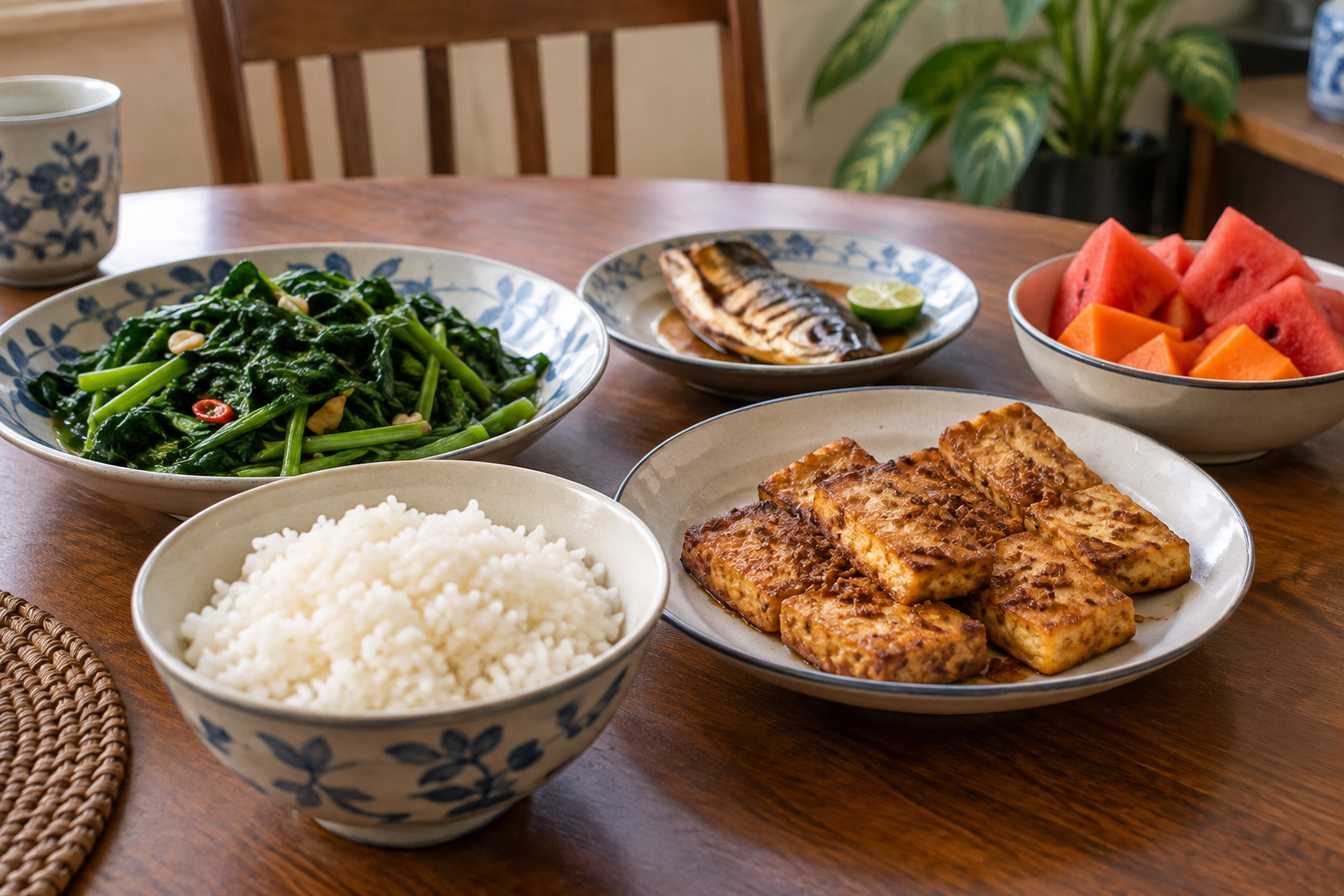
If you are eating nasi campur, you can still think about a protein choice, vegetables and how the meal fits the rest of your day. If you are at home, you can make the familiar meal more complete instead of cooking a separate "diet" meal for yourself. If a meeting runs late, you can have a backup option rather than letting one inconvenient meal become a reason to abandon the week.
That does not mean every choice has the same nutritional value. It means useful nutrition decisions need to be repeatable.
Protein and fat loss are not a licence to ignore the full picture
Adding protein does not cancel out a pattern of eating that is consistently beyond the energy intake a person needs. It also does not remove the need to train, recover and review progress honestly.
If hunger, sleep or recovery is making the plan hard to repeat, that is useful information to review rather than ignore. Small controlled studies have found that shorter sleep can change hunger and observed weight-loss composition, but they do not diagnose the reason for an individual person's hunger. [6][7]
If body weight changes but strength, waist trend, hunger, sleep and training quality are all moving in unhelpful directions, the answer may not be another protein target. It may be time to review the plan as a whole. Read Losing Fat Without Losing Muscle: What a Good Fat-Loss Plan Should Protect and Strength Training After 40: Start With Capacity, Not Ego for that broader picture. A single scale reading also needs context. Why Is My Waist Getting Smaller but My Weight Isn’t Dropping? explains why.
My practical starting framework
- Choose two or three protein-containing meals you already like.
- Prepare the easiest version for busy days.
- Repeat those meals often enough to learn whether they work.
- Review hunger, energy, training, waist trend and adherence together.
- Adjust the plan only after looking at the full picture.
This is a Coach Ho coaching framework for making food decisions more practical. It is not a diagnostic tool or a medical nutrition prescription. During fat loss, food structure and training performance should also be considered together, because pooled evidence suggests energy deficiency can impair lean-mass gains from resistance training. [8]
When to get individual advice
Food requirements can change with medical conditions, pregnancy, eating-disorder history, prescribed diets, allergies, gastrointestinal symptoms or medication. Those situations deserve appropriate personalised input from a qualified healthcare or nutrition professional.
Take-home message
Protein can help make a fat-loss plan more useful, but it is not the plan by itself. Build meals you can repeat. Keep the full picture in view. Then make the next decision from evidence, not panic.
FAQ
Is protein enough to lose fat?
No. Protein can be useful, but fat loss depends on the whole pattern of energy intake, training, recovery and adherence.
Do I need protein shakes?
Not automatically. A shake may be convenient for some people, but it is not a requirement for a useful fat-loss plan.
What should I eat for fat loss in Malaysia?
Start with familiar foods you can repeat. Include a protein source and build the rest of the meal around your needs, preferences and wider plan.
How do I know whether my meal plan is working?
Look at several signals together: adherence, hunger, energy, waist trend, body-weight trend, sleep, training and recovery. No single meal or measurement tells the full story.
References
- Kokura Y, et al. Systematic review and meta-analysis.
- Hudson JL, et al. Systematic review and meta-analysis.
- Wycherley TP, et al. Meta-analysis of randomized trials.
- Backx EMP, et al. Randomized controlled trial.
- Dansinger ML, et al. Randomized trial.
- Nedeltcheva AV, et al. Randomized crossover trial.
- Wang X, et al. Randomized controlled trial.
- Murphy C and Koehler K. Meta-analysis and meta-regression.

About Coach Ho Yah Wen
Coach Ho Yah Wen is the Founder and Master Coach of HO-LIAO FITNESS in Penang, Malaysia. He focuses on sustainable fat loss, body composition and strength training.